A day on the slopes in Sierra Nevada is far more fun when everyone follows a few basic rules. Most accidents on the slope are not down to bad luck, but to speed, stopping in the wrong place or not knowing who has to give way. That is why, before you clip into your skis, it is worth reviewing the FIS rules of conduct and knowing what to do if something goes wrong. These ski safety tips work whether you are just starting out or have been skiing for twenty seasons, and they will help you enjoy every run with more peace of mind.
Five minutes of reading that could save you a lot of trouble.
The 10 FIS Rules of Conduct Every Skier Should Know
The International Ski Federation (FIS) published a set of ten rules of conduct for skiers and snowboarders that is now followed at practically every resort. They are not a law, but in the event of an accident they are used as a reference to judge each person’s behaviour.
1. Respect for others
Every skier must behave in a way that does not endanger or harm other people. This applies to you, to your equipment and to everyone sharing the slope with you, from a child on their first run to an expert skier.
2. Control of speed and behaviour
You must adapt your speed and style of skiing to your ability, the condition of the snow, visibility and how crowded the slope is. It is the rule that prevents the most accidents.
If you cannot stop in time when faced with an obstacle, you are going too fast.
3. Choice of route
The skier coming from above is the one who has to choose their line, and must do so in a way that does not endanger the person in front. The skier below always has priority.
4. Safe overtaking on the slope
You can overtake on the right or the left, from above or below, but always leaving enough space for the person being overtaken to move without being startled. If you overtake, making it safe is your responsibility.
5. Entering slopes and moving uphill
Before joining a slope, starting again after a stop or moving uphill, look up and down to make sure you can do it safely. A two-second glance prevents many collisions at junctions.
6. Stopping on the slope: safe and visible places
Avoid stopping in narrow sections, bends or places with poor visibility, because nobody coming from above can see you. If you fall in one of those spots, move out of the way as soon as you can. When you want to rest, always do it at the side.
7. Climbing and descending on foot
If you have to walk up or down, do it along the edge of the slope and never down the middle. Walking in the middle of the slope is dangerous and also damages the snow for everyone skiing after you.
8. Respect for signs and markings
Difficulty signs, warning notices and markers are there for a reason. Respect closed slopes, avalanche-risk areas and the instructions of the slope staff. Ignoring a closure puts at risk the people who may have to rescue you.
9. Giving help in the event of an accident
Every skier has a duty to help when someone is injured. That means staying with the casualty, alerting the slope rescue service and providing whatever is needed until they arrive. Below, we explain how to do it step by step.
10. Identification
If you witness or are involved in an accident, whether as a witness or as the person responsible, you must give your details to the slope staff and to anyone who asks for them. It is the rule people forget most often, and the one that helps most to clarify what happened.
What to Do in a Ski Accident: The PAS Protocol
If you see a serious fall, do not panic and do not move the person. What you need to do comes down to three steps: protect, alert and help (known as PAS, from the Spanish proteger, avisar, socorrer).
Important: do not move the injured person unless there is an immediate danger.
Protect: how to mark the area with crossed skis
The first thing is to prevent a second accident. Stick your skis into the snow crossed in an X shape a few metres above the injured person, so that anyone coming down behind can see there is an obstacle. If it is a snowboarder, use the board. Never leave the area unmarked.
Alert: resort emergency numbers and slope patrol
Alert the slope staff or any resort employee as soon as possible. If you cannot find anyone, the general emergency number is 112. It is a good idea to save the resort’s emergency number in your phone before you start the day.
When you call, have these details clear:
- Where it happened: the name or colour of the slope and the approximate spot.
- How many people are involved.
- How the injured person is: whether they are conscious, whether they are in pain and where.
- Your name and a contact phone number.
Help: basic first aid in the mountains
Do not move the casualty, help them stay in a comfortable position and keep them warm, because people cool down very quickly in the snow. Do not remove their helmet or boots. Talk to them, reassure them and wait for the slope staff, who know how to deal with each type of injury and have the equipment to evacuate them.
Active Safety Equipment: Why a Helmet and Protection Matter
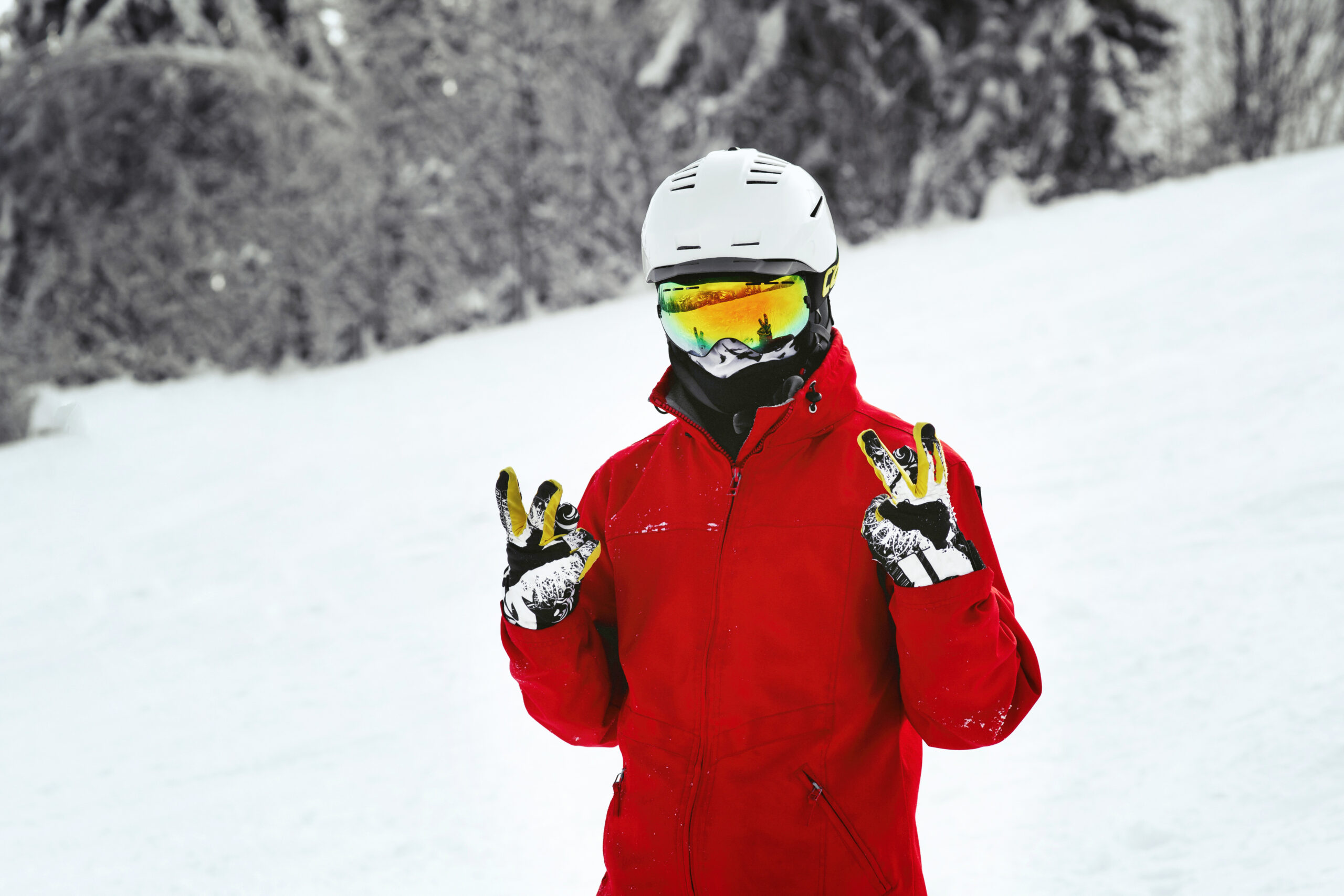
Beyond the rules, your equipment makes the difference when there is a fall. The helmet is the most important item, and today it is worn by skiers of all levels, adults included. In some cases the regulations require it for minors, so it is worth checking before you travel. But it is not the only thing that counts.
These are the items that help most, depending on your level and discipline:
| Item | What it does | Who needs it |
|---|---|---|
| Helmet | Protects the head in falls and collisions | Everyone, especially children |
| Goggles or mask | Improve visibility and protect from sun, wind and snow | Everyone |
| Back protector | Absorbs impacts to the spine | Anyone skiing fast, jumping or going off-piste |
| Wrist guards | Prevent injuries when you put a hand down in a fall | Snowboarders, especially beginners |
If you are travelling with children, the best option is for them to have equipment that fits them properly. At Riosport you can check out our kids’ ski rental in Sierra Nevada, with equipment designed so they can learn safely.
Ski Safely, Ski Calmly
Reviewing these rules takes five minutes and prevents most scares. If in doubt, slow down, leave space and think of whoever is coming behind you. With that, and with well-checked equipment, all that is left is to enjoy the snow.