Leaving behind the groomed tracks of Pradollano and venturing into untracked snow is the ultimate expression of freedom offered by Sierra Nevada. However, off-piste skiing requires transforming your technical driving, understanding how to read the snowpack, and having impeccable equipment.
At Veleta peak and the slopes of the San Juan valley, where sun and wind alter snow texture in a matter of hours, taking the leap into freeride requires professional judgment to guarantee maximum safety on every descent.
-
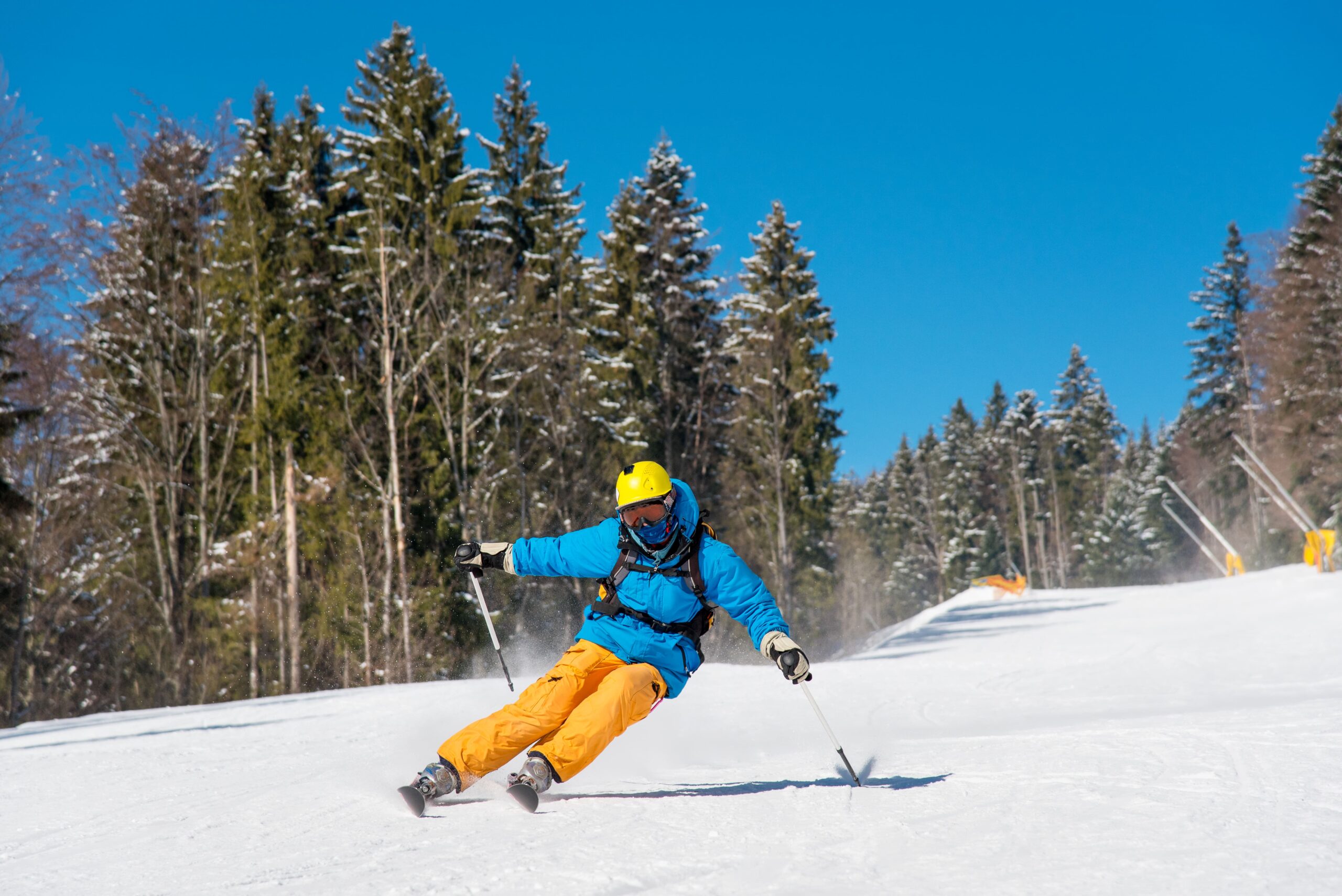
Master an adapted technique: Absolute body centrality, buoyancy, and flexed turns replace aggressive edge carving.
-
Carry mandatory safety gear: The safety trilogy (avalanche transceiver/DVA, shovel, and probe) is strictly non-negotiable before leaving marked boundaries.
-
Assess terrain and conditions: A rigorous reading of slope orientation combined with checking the avalanche report prevents high-risk situations.
-
Use specialized equipment: Wide skis with a pronounced rocker facilitate flotation and reduce muscle fatigue in powder.
-
Ensure proper gear fitting: Precise adjustments to bindings and boots are essential to transfer force without losing control over uneven surfaces.
Introduction to Freeride: What is Off-Piste Skiing?
Freeride consists of descending unpaved, un-groomed terrain beyond the resort’s marked boundaries.
Unlike conventional alpine skiing, off-piste terrain presents a living, ever-changing surface. In Sierra Nevada, light powder in sheltered slopes coexists with hardpack plates or dense spring snow in mid-altitudes.
Venturing off the trail map means taking total responsibility for your line of descent.
There are no protective nets or hazard markers for rocks, so tackling this discipline requires adapting your rhythm, sharpening your eyes to terrain contours, and mastering ski behavior in inconsistent snow.
Technical Requirements Before Leaving Marked Slopes
Stepping up from the red and black runs of Loma de Dílar into untouched powder is not a matter of speed, but of biomechanical precision. To ski off-piste smoothly across untreated terrain, your technique must evolve around three key pillars:
-
Neutral and centered stance: Weight is distributed evenly between both skis to spread the load. Leaning too far back only fatigues your quads and deprives you of control over the ski tips.
-
Progressive edging and shock absorption: Edges are engaged softly. Ankles and knees act as your body’s suspension, absorbing invisible ruts and bumps under fresh snow.
-
Flex-extension turn cadence: The transition between turns is achieved through smooth body extension and flexion, allowing the tips to float without bogging down in deep snow.
The most common mistake in un-groomed snow is leaning back out of fear that the ski tips will dive. Flotation is not achieved by throwing weight onto your heels, but by balancing on a waist of appropriate width and maintaining an active boot flex working in your favor.
Mandatory Safety Equipment for Off-Piste Skiing
Outside the protected domain of the resort, the mountain demands self-sufficiency. No skier, regardless of experience, should venture into the backcountry without essential rescue gear in their backpack:
The DVA, Shovel, and Probe Pack
- DVA/ARVA (Avalanche Transceiver): Essential electronic transmitter-receiver. It must be worn close to the body under thermal layers and turned on in transmit mode before starting the descent.
- Snow Probe: Deployable rod used to mechanically pinpoint the exact location and depth of a buried victim. Lengths over 240 cm are recommended.
- Rigid Snow Shovel: Equipped with a heavy-duty aluminum blade. Synthetic blades shatter when trying to dig through packed snow or wind slabs.
| Element | Main Function | Key Specifications |
| DVA/ARVA | Electromagnetic localization |
3 antennas, multiple marking feature, initial group check |
| Probe | Direct depth marking |
Graduated in cm, quick-tension cable, 240–300 cm length |
| Shovel | Physical extraction |
Anodized aluminum blade, telescopic shaft, ergonomic grip |
Rescue gear is not just backpack decoration. Checking DVA battery levels before heading out and conducting regular search drills with your skiing partners is as crucial as carrying the pack itself.
If you love climbing the peak under your own power to find pristine powder, check out our Sierra Nevada ski touring rental service to equip yourself with unlockable touring bindings and premium climbing skins.
How to Read Terrain and Assess Avalanche Risk
The snowpack in Sierra Nevada undergoes constant changes due to midday sunshine and strong east or west winds. Wind gusts transport loose snow, forming wind slabs over ridges and increasing instability in sheltered areas.
To minimize exposure to dangerous situations, follow these guidelines:
-
Consult the Avalanche Bulletin (BPA): Always check the official risk level (1 to 5) before planning your route.
-
Evaluate slope orientation: North-facing slopes retain icy powder or fragile slabs due to lack of sunlight, whereas south-facing slopes undergo rapid spring-snow humidification during the day.
-
Identify terrain traps: Ravines, rock drops, and depressions are spots where snow accumulation in an avalanche event becomes critical.
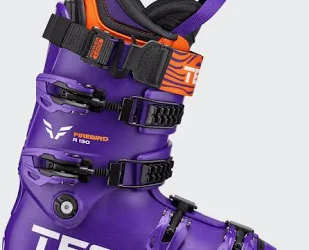
A millimeter-precise DIN adjustment on your bindings and custom-fitted boot liners mark the difference between a memorable day and a joint injury. Off-piste, equipment must release the boot exactly when biomechanics require it.
If you experience heel pressure, rubbing, or lack of precision, our bootfitting and custom ski boots in Sierra Nevada at the Pradollano shop adapts the shell to the exact anatomy of your foot.
Equipment Choice and Maintenance for Off-Piste
To enjoy freeride skiing in powder without exhausting your muscles, the geometry and preparation of your skis are decisive. Specific backcountry skis feature a wider waist (from 95 mm up) and a pronounced tip and tail rocker profile, raising the tips above the snow effortlessly.
In our specialized workshop, we tune skis for maximum fluidity:
-
Base structuring: Base grinding removes the suction effect caused by wet or late-day spring snow.
-
Thermal penetration waxing: High-performance waxes protect base graphite and ensure consistent glide during rapid temperature shifts.
-
Edge tuning & beveling: Precise edge angles provide the confidence required to transition smoothly from pristine powder to an icy slab without losing your line.
To tune your skis or inspect your bindings before heading out, visit our Sierra Nevada ski workshop, where our technicians will apply the specialized maintenance your gear requires.
Frequently Asked Questions (FAQ)
Do I need a very high technical level to start off-piste skiing?
You need to comfortably control red slopes and ski black runs fluently while maintaining parallel control and speed management. You don’t need to be a pro, but quick reflexes are necessary to react to unexpected terrain changes.
Can I ski off-piste with traditional on-piste skis?
You can make brief dips into side-piste terrain, but narrow carving skis (waist under 80 mm) sink into deep snow, requiring excessive muscle effort and making turn initiation difficult.
What is the best time of day to ski off-piste in Sierra Nevada?
It depends on orientation. On south-facing slopes, late morning is ideal as spring snow softens. On sheltered north faces, early hours offer drier powder if night temperatures stayed below freezing.
Sources & Authority
-
International Snow Science Workshop (ISSW): Technical safety standards, snow physics research, and avalanche risk assessment.
-
EAWS (European Avalanche Warning Services): Standardized European criteria for avalanche risk level interpretation.
-
Riosport Sierra Nevada: Technical team specializing in biomechanical analysis, base maintenance, and freeride equipment selection.