Slide through the morning turns on Sierra Nevada’s slopes demands equipment tuned to absolute perfection. Keeping your bases hydrated and edges razor-sharp is not merely about performance; it represents your primary line of defense for safety and control when carving across variable mountain conditions.
Key Takeaways
-
Optimal glide dynamics: proper hot waxing reduces friction coefficient while shielding the base structure against snow abrasion.
-
Precision edge grip: accurate bevel angles ensure unyielding bite on hardpack sections around Veleta’s upper bowl.
-
Preventative structural repairs: sealing base gouges with cofix prevents water ingress into the internal wood or composite core.
-
Equipment longevity: routine maintenance protocols significantly extend the service lifespan of your skis or snowboard.
-
Bench-grade accuracy: professional stone grinding and base bevel tuning deliver tolerances unachievable through manual hand tools.
Why is routine ski and snowboard maintenance essential?
Continuous exposure to abrasive snow crystals gradually strips moisture from the polyethylene base and rounds off metallic edge profiles. Neglected equipment becomes sluggish, responds unpredictably during turn initiation, and lacks stability on firm morning corduroy or icy patches.
“On crisp mornings along Loma de Dílar, the boundary between executing clean, carved arcs and fighting for edge traction comes down entirely to the tuning work applied to your edges the evening before.”
Consistent mantenimiento tabla de esqui prevents critical internal core damage. When the base dries completely, the P-Tex polymer loses its elasticity, rendering it vulnerable to severe rock impacts and structural delamination.
DIY step-by-step ski maintenance at home
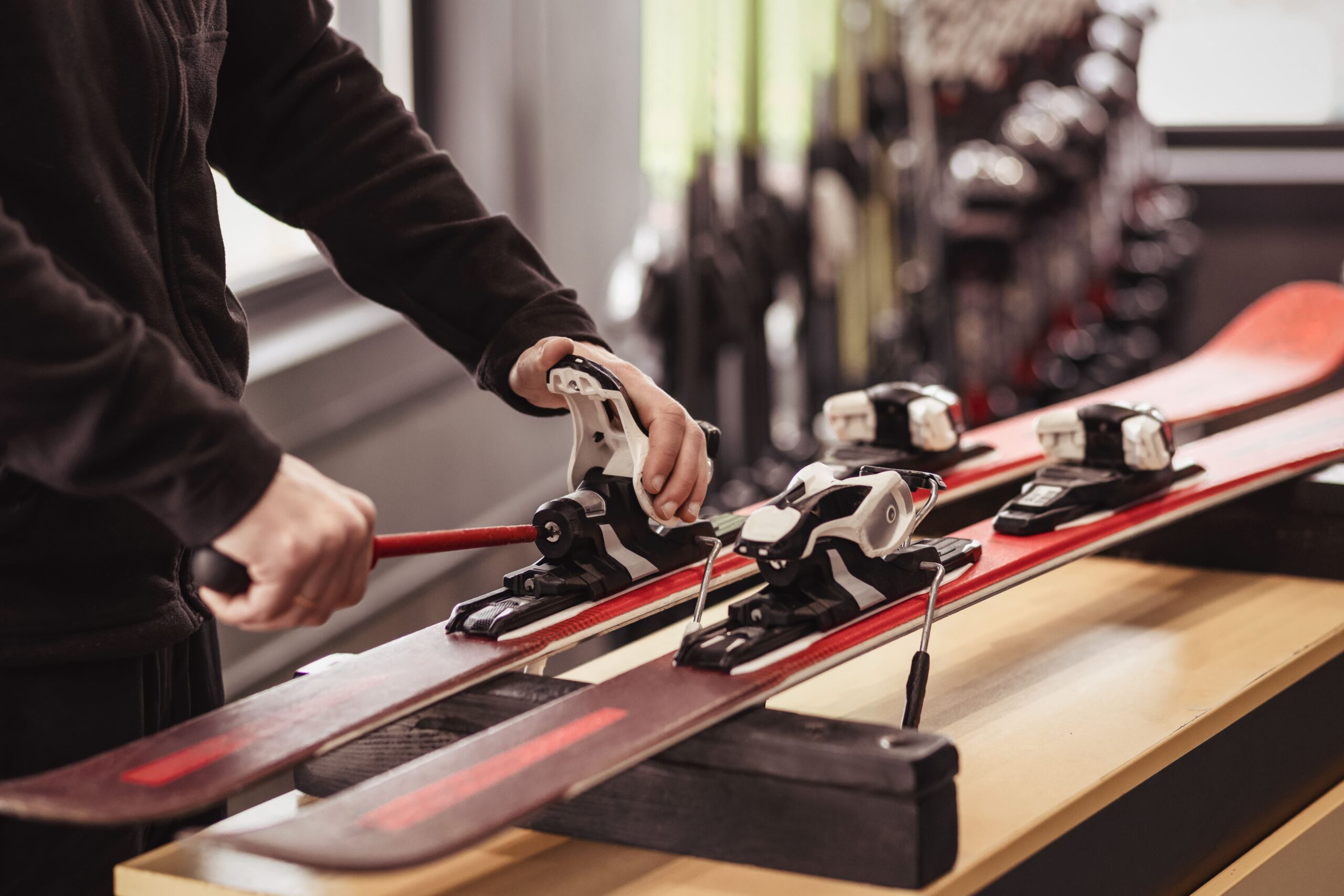
Executing a home bench tune requires a systematic approach, patience, and purpose-built tools to safeguard your equipment’s structural integrity.
| Tuning Stage | Essential Tool | Technical Objective |
| Base cleaning | Citrus base cleaner & bronze brush |
Strip deep contaminants and oxidized wax residues. |
| Damage repair | P-Tex cofix candle & metal scraper |
Seal base scratches prior to wax application. |
| Edge sharpening | Fixed angle file guide & fine file |
Restore sharp side edge geometry for hardpack bite. |
| Hot waxing | Waxing iron & temperature-specific wax |
Saturate the microscopic pores of the P-Tex base. |
Base cleaning and cofix repair for deep gouges
Before introducing thermal waxes, the base material must be thoroughly degreased and free of surface debris.
-
Wipe the base thoroughly with a lint-free shop towel and apply liquid base cleaner to dissolve old wax.
-
Work the bronze brush in a tip-to-tail direction to clear micro-grooves within the P-Tex structure.
-
Ignite the cofix repair candle, holding it close to the gouge to drop molten material smoothly into the void.
-
Allow the repair to cool for 20 minutes before scraping the excess flush using a flat metal scraper.
“If a core shot exposes the underlying fiberglass weave or wood core, skip DIY cofix repairs and bring the board to a workshop for a hydraulic press patch.”
Sharpening side edges for firm snow traction
Mastering how to afilar cantos snowboard or ski edges demands consistent hand pressure to preserve side cut geometry along the effective edge.
-
Secure your board or skis firmly into tuning vices to eliminate chatter and flex.
-
Mount a fine-cut file into a dedicated bevel guide (typically set between 88° and 89° for all-mountain performance).
-
Draw the file smoothly from tip to tail applying light, uniform downward pressure.
-
Finish with a wet diamond stone pass to polish away micro-burrs and harden the steel edge.
The hot wax application technique
Understanding como encerar esquis or snowboards at home centers on strict thermal control to prevent burning the base matrix.
-
Set your tuning iron to the temperature recommended on your wax bar (generally between 110 °C and 130 °C).
-
Touch the wax bar against the iron plate, dripping an even pattern of melted wax along the base.
-
Move the iron smoothly from tip to tail without pausing on any single spot to distribute wax deep into the P-Tex.
-
Let the wax cool for two hours, scrape away excess with a plastic scraper, and brush thoroughly with stiff nylon.
When should you take your equipment to a professional workshop?
While home maintenance preserves daily performance, industrial stone grinders are essential for leveling dished bases and renewing base structures.
-
Every 5 to 8 days on snow: execute a hot wax treatment and touch up side edges with diamond stones.
-
Once per season minimum: submit equipment for full base leveling and stone-structured linear patterns.
-
Following major rock strikes: whenever an impact deforms the edge rail or fractures the base core.
“In Sierra Nevada’s changing snow conditions, where firm morning pistes shift to spring slush by afternoon, precise base structuring is the single factor managing water displacement to maintain glide speed.”
For precision tuning backed by modern workshop machinery, visit our dedicated sierra nevada ski snowboard workshop. Looking to elevate your setup? Explore our custom ski boots bootfitting in sierra nevada services, browse our selection for ski rental sierra nevada, or check out premium options for snow rental sierra nevada.
Sources & Technical Authority
-
Spanish Association of Ski Workshop Technicians (AETTE): technical standards on high-density P-Tex thermal treatment and edge geometries.
-
Swarix Ski Tuning Standards: international guidelines for bevel angles and base structuring on alpine snow.
-
Riosport Technical Expertise: workshop protocols practiced daily on high-end rental and customer equipment in Sierra Nevada.

Riosport is a high-altitude performance consultancy and premium advisory firm based in Sierra Nevada. Moving away from conventional rentals, it provides top-tier, constantly renewed equipment, a specialized workshop, and custom bootfitting services—making it the ideal strategic partner to ensure safety, exclusivity, and total comfort on the snow.